Alopecia - Hair Loss

Collapse
X
 
  • Saat
  • Show
Clear All
new posts
  • stockbroker
    Master
    • 28 Temmuz 2008
    • 4807

    #1

    Alopecia - Hair Loss

    Alopecia means loss of hair from the head or body. Alopecia can mean baldness, a term generally reserved for pattern alopecia or androgenic alopecia. Compulsive pulling of hair (trichotillomania) can also produce hair loss. Hairstyling routines such as tight ponytails or braids may also induce a form of alopecia known as Traction alopecia, as can hair relaxer solutions, and hot hair irons. In some cases, alopecia is due to underlying medical conditions, such as iron deficiency.
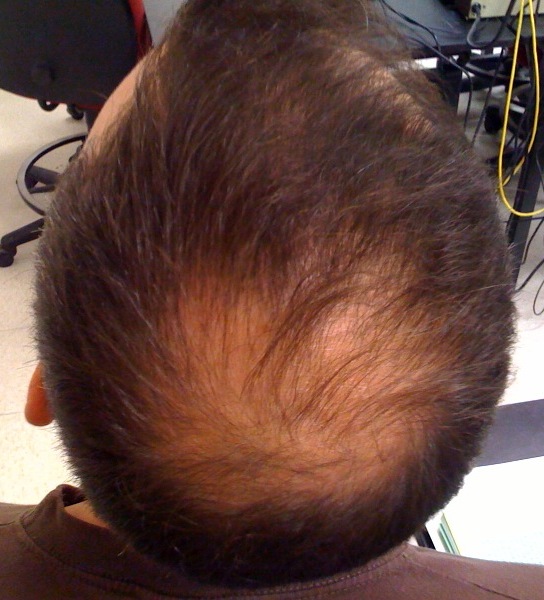


    Generally, hair loss in patches signifies alopecia areata. Alopecia areata typically presents with sudden hair loss causing patches to appear on the scalp or other areas of the body. If left untreated, or if the disease does not respond to treatment, complete baldness can result in the affected area, which is referred to as alopecia totalis. When the entire body suffers from complete hair loss, it is referred to as alopecia universalis. It is similar in to the effects that occur with chemotherapy.
  • stockbroker
    Master
    • 28 Temmuz 2008
    • 4807

    #2
    Signs and symptoms

    When examining the scalp, the distribution of hair loss, presence and characteristics of skin lesions, and the presence of scarring should be noted. Part widths should be measured. All abnormalities should be noted.

    In male-pattern hair loss, loss and thinning begin at the temples and either thins out or falls out. Female-pattern hair loss occurs when hair thinning occurs at the frontal and parietal.

    Causes

    Alopecia mucinosa
    Androgenic alopecia
    Dissecting Cellulitis
    Fungal Infections (such as tinea capitis)
    Hair Treatments (chemicals in relaxers, hair straighteners)
    Hereditary Disorder
    Hormonal Changes
    Hyperthyroidism and Hypothyroidism
    Hypervitaminosis A
    Iron deficiency
    Lupus Erythematosus
    Medications (side effects from drugs, such as chemotherapy)
    Pseudopelade of Brocq
    Radiation therapy
    Scalp infection
    Secondary syphilis
    Telogen effluvium
    Traction alopecia
    Trichotillomania
    Tufted folliculitis

    Yorum

    • stockbroker
      Master
      • 28 Temmuz 2008
      • 4807

      #3
      Pathophysiology

      Hair follicle growth occurs in cycles. Each cycle consists of a long growing phase (anagen), a short transitional phase (catagen) and a short resting phase (telogen). At the end of the resting phase, the hair falls out (exogen) and a new hair starts growing in the follicle beginning the cycle again.

      Normally about 100 hairs reach the end of their resting phase each day and fall out[citation needed]. When more than 100 hairs fall out per day, clinical hair loss (telogen effluvium) may occur. A disruption of the growing phase causes abnormal loss of anagen hairs (anagen effluvium).

      Diagnosis

      Evaluation for causative disorders should be done based on clinical symptoms. Because they are not usually associated with an increased loss rate, male-pattern and female-pattern hair loss don’t generally require testing. If hair loss occurs in a young man with no family history, the physician should question the patient on drug and illicit drug use.

      The pull test: this test helps to evaluate diffuse scalp hair loss. Gentle traction is exerted on a group of hair (about 40–60) on three different areas of the scalp. The number of extracted hairs is counted and examined under a microscope. Normally, <3 hairs per area should come out with each pull. If >10 hairs are obtained, the pull test is considered positive.
      The pluck test: In this test, the individual pulls hair out “by the roots.” The root of the plucked hair is examined under a microscope to determine the phase of growth and used to diagnose a defect of telogen, anagen, or systemic disease. Telogen hairs are hairs that have tiny bulbs without sheaths at their roots. Telogen effluvium shows an increased percentage of hairs upon examination. Anagen hairs are hairs that have sheaths attached to their roots. Anagen effluvium shows a decrease in telogen-phase hairs and an increased number of broken hairs.
      Scalp biopsy: This test is done when alopecia is present, but the diagnosis is unsure. The biopsy allows for differing between scarring and nonscarring forms. Hair samples are taken from areas of inflammation, usually around the border of the bald patch.
      Daily Hair Counts: This is normally done when the pull test is negative. It is done by counting the number of hairs lost. The hair that should be counted are the hairs from the first morning combing or during washing. The hair is collected in a clear plastic bag for 14 days. The strands are recorded. If the hair count is >100/day, it is considered abnormal except after shampooing, where hair counts will be up to 250 and be normal.
      Trichoscopy: Trichoscopy is a non-invasive method of hair and scalp. The test may be performed with the use of a handheld dermoscope or a video dermoscope. It allows differential diagnosis of hair loss in most cases.

      Quoted

      Yorum

      Working...
      X

      Debug Information